Preparing and using clay cookware
Before first use
Preparing a newly bought pot
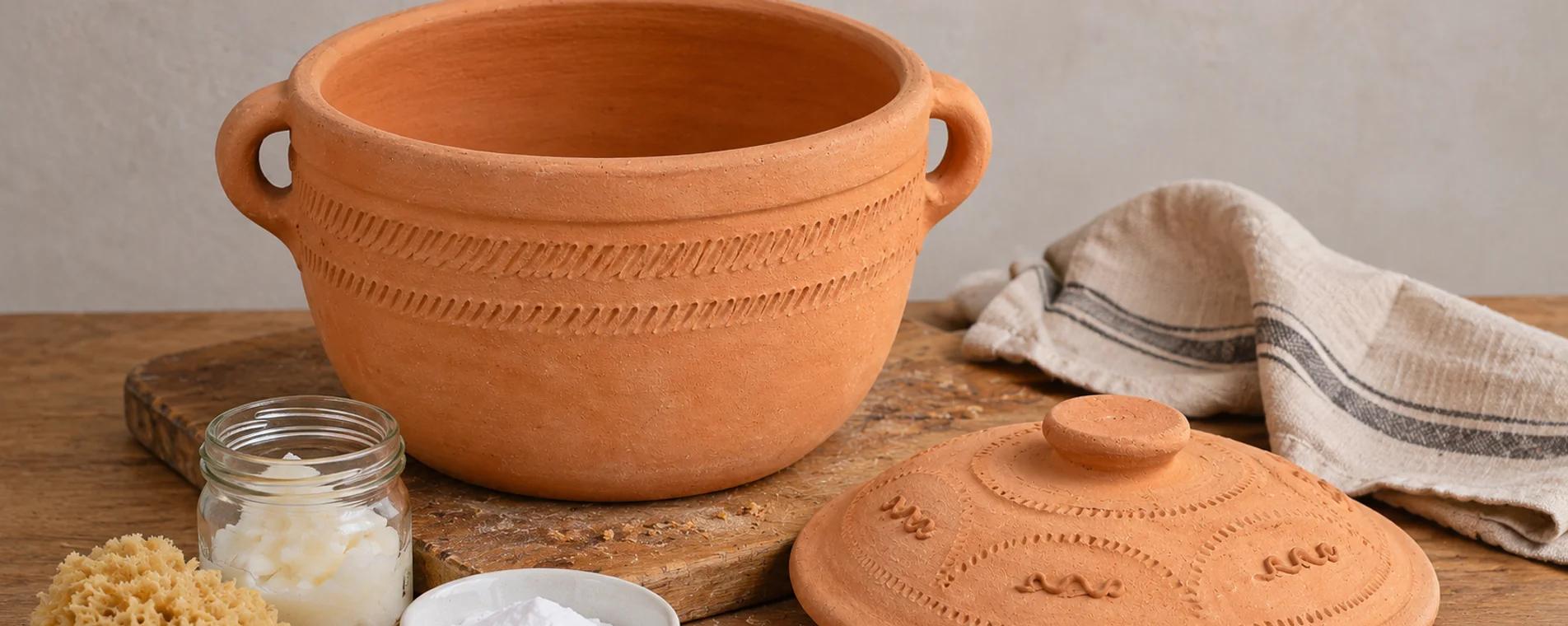
First rinse the dust off the pot with lukewarm water and a sponge that has never touched detergent.
Dry it for a few hours in the sun in an airy place, or for at least half an hour in the oven at 40 °C.
Coat all inner surfaces of the pot and lid with a thin layer of lard or oil. Rub the fat in well so the surface absorbs it and darkens, and wipe off the excess with a paper towel.
Put the greased pot in a cold oven (or on an open fire outdoors, but then add embers or turn up the gas gradually).
Set the oven to 200 °C and bake the empty pot for up to an hour.
Switch off the oven and let the pot cool down naturally.
Wash and dry the cooled pot again. It is ready for your first meal.
Key rules
What you need to remember
- Pottery does not tolerate sudden changes in temperature. Heat it gradually, otherwise it may crack.
- The pot must heat evenly across its whole surface.
- The pot must be dry. After washing with lukewarm water, a sponge and baking soda, dry it for at least half an hour in the oven at 40 °C or for a few hours in the sun in an airy place. Lay the pot and lid on their side while drying so water does not collect at the bottom.
- When the food is ready, or when you take the pot off the heat to check it, always put the hot pot and lid on a wooden board. Never put them on cold concrete, tiles or any other cold or damp surface.
- Do not put a freshly washed pot straight onto strong heat; dry it first as described.
- Before use, grease the inside of the dry pot with lard or oil and only then add the food, whether you are making a stew or roasting.
Cooking on an electric hob
Whether your electric hob has classic hotplates or a flat glass-ceramic surface, the cooking zone must be larger than the bottom of the clay pot so the heat spreads evenly across the whole pot. The zone must be cold; once the pot is on it, heat it gradually. If the zone is smaller than the bottom of the pot, place a wider metal plate on it to spread the heat evenly across the bottom.
On a glass-ceramic hob, set the pot down carefully and do not slide or turn it. The rough bottom of a clay pot can scratch the smooth glass, so we recommend a metal plate between the hob and the pot, or covering the bottom with aluminium foil. The metal plate must be larger than the bottom of the pot.
Clay cookware cannot be used directly on an induction hob, because induction only works with metal cookware. On induction you need a flat metal plate that heats up and passes the heat to the pot. This plate, too, must be wider than the bottom of the clay pot.
Cooking and baking in the oven
Electric cooker
Put the clay sač, pot or roaster in a cold oven and only then heat it to the desired temperature. Depending on the height of the pot, set the rack so the heat circulates evenly around it.
Wood-burning stove
First open the oven door to let it cool, then place the pot on the open door to warm up slowly, and only then push it into the oven. Wait a little longer for the pot to heat up, then close the door and carry on stoking and cooking.
Cooking on a gas hob
We do not recommend exposing a clay pot to a direct flame. On a gas hob, use a metal plate that spreads the heat of the flame evenly across the bottom of the pot. The plate must be larger than the bottom of the pot and at least 3 to 4 millimetres thick.
Do not use the highest flame. Heat the pot on a low flame first, then turn it up to medium.
Using clay cookware over embers
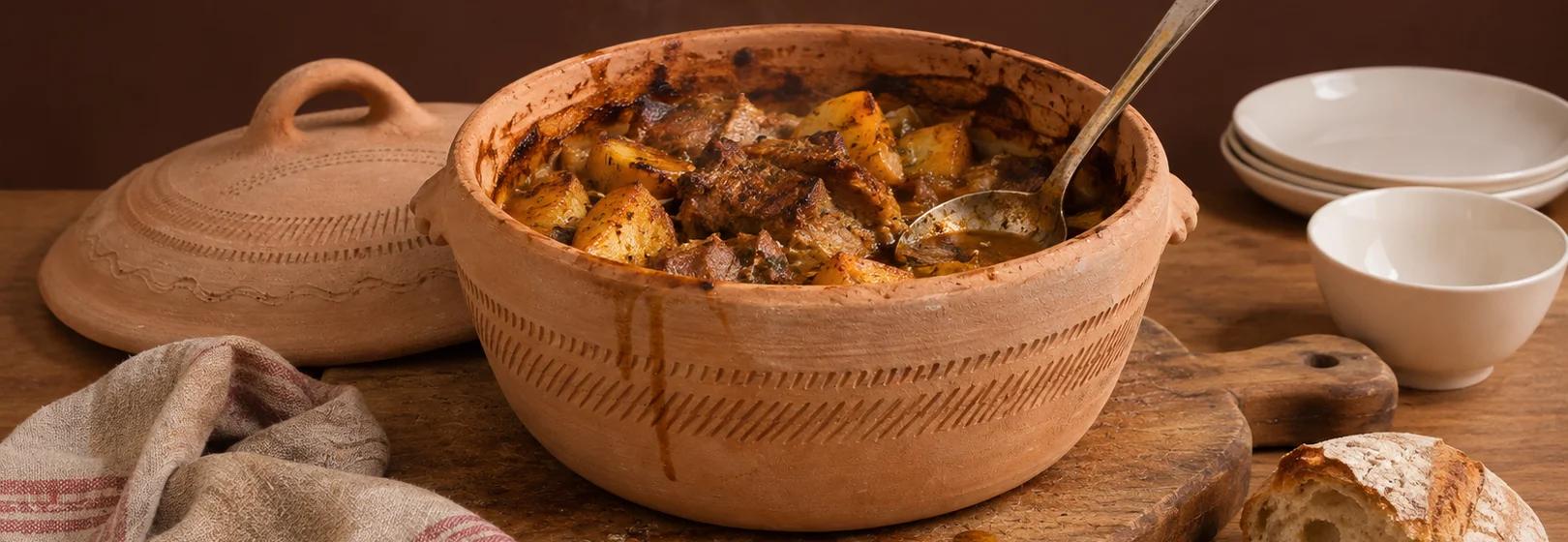
If you can cook the traditional way, by the fire, do not put the pot directly on the embers. The pot draws heat quickly and the food may burn.
Light a fire and spread out the embers once they form.
Place the pot in the middle so the embers are 20 centimetres away.
As the pot heats up, gradually move the embers closer until they are 5 centimetres away.
Check from time to time whether the food has come to the boil. Do not let it boil hard; let it simmer gently.
If it is hard to keep the heat steady with smouldering wood, use charcoal.
We do not recommend putting embers on the lid, as it does not change the end result. If you still want to put some embers on the lid, keep the ratio at 80% around the pot and only 20% on the lid. Put embers on the lid only halfway through cooking, when you are sure the pot is fully heated. When lifting the lid, make sure no embers or ash fall into the food.
If you use a clay sač in a bread oven or masonry oven, open the door and place the sač at the entrance until it warms up, then push it inside and close the door.
Caring for your pottery
- After every use, wash clay cookware with hot water only, without detergent.
- Use a sponge reserved for clay cookware only, so it never comes into contact with washing-up liquid.
- If food burns or sticks to the bottom (which is rare, since everything cooks over low heat with an eye on the liquid level), let it soak in water, then remove it with a stiff brush and wash the pot with hot water.
- Instead of detergent you can use baking soda. Wet the inside of the pot, sprinkle in a spoonful of baking soda, scrub with a clean sponge and rinse well with water.
- Always dry the pot well after washing: place it upside down on a tea towel or paper towel, or dry it for 30 minutes in the oven at 40 to 70 °C.
Warning
Never wash clay cookware in a dishwasher!